
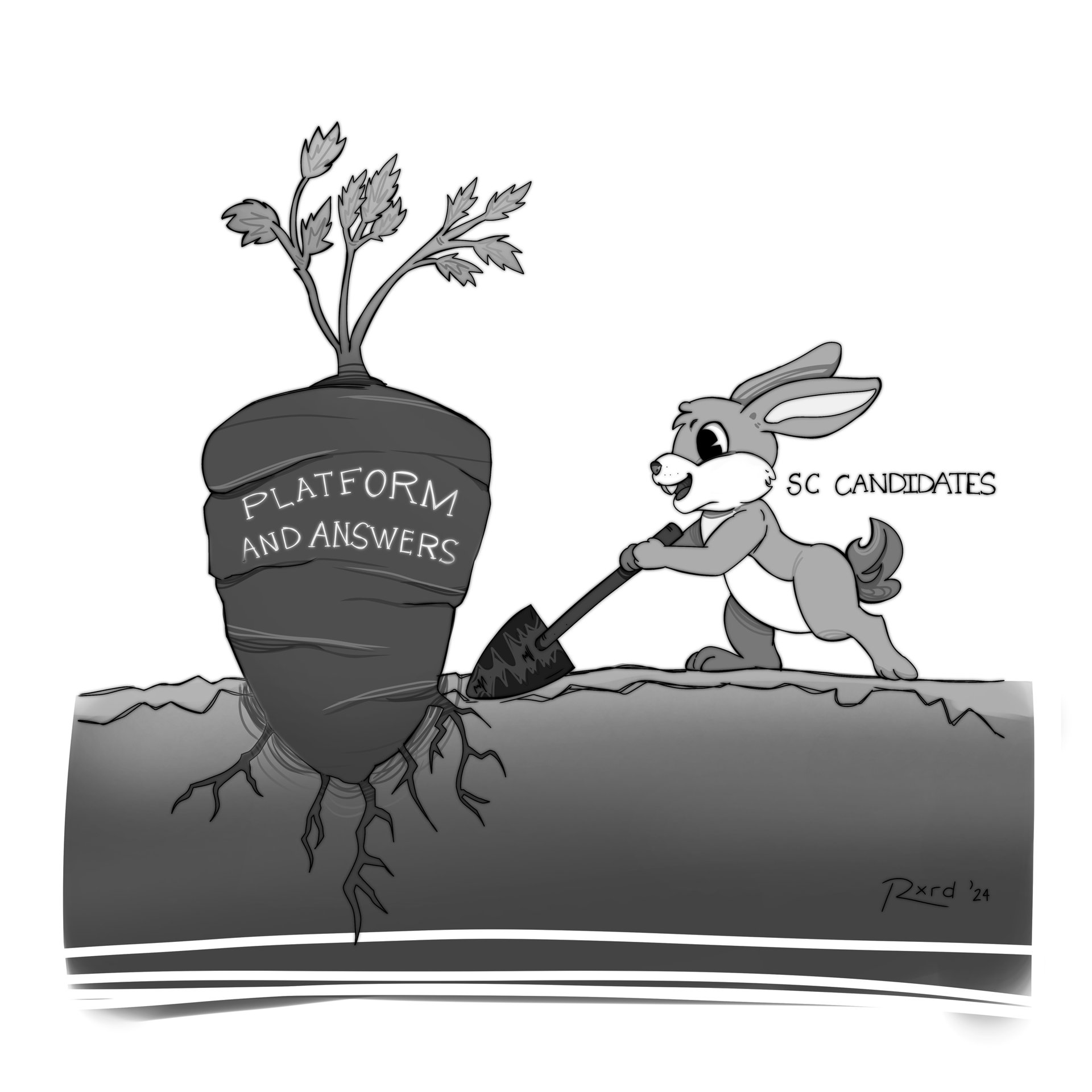
Shovelling the Bare Minimum
EDITORIAL
Gone are the days when student-elections served their actual purpose—to let the students select the next public servants that will lead the student body at large. These days, the students have no choice but to settle with whoever is served to them since almost all of the candidates are unopposed. Additionally, not every position has a running candidate, leaving those positions open for appointments after the elections. And since the running one-color candidates are not challenged by another party, the aspiring student-leaders have seemed to be quite complacent now. In fact, in the Miting de Avance conducted by the Student Commission on Elections (S-COM) on May 31, 2024, only 60 out of 135 candidates running for office entered the scene and faced the Honorians and their questions.
While it is a valid circumstance to not be able to promise attendance due to the finals examinations week, the fact that many did not make even a short appearance for this event was bittersweet, to say the least. It was even more eyebrow-raising to observe that one of the colleges had a present commissioner but completely absent candidates. In an attempt to fulfill their academic responsibilities, many of these hopefuls seemed to have been hindered from fulfilling a bigger one. This raises concerns about the capacity of the Honorians’ future representation to bear the challenging responsibility of leading.
And in this event meant to give the Honorians the reassurance of the candidates’ competence through their answers, some of their stances on key issues, and their platforms, the absence of more than half of the candidates only left the community with more questions.
Another concern arose from the answers of many of the candidates to queries on social and political issues concerning both the university and the society in general. It is both alarming and disheartening that some aspirants lack even the most basic knowledge regarding timely sociopolitical issues. Aside from controversial stances and opinions, it is also notable how some answers failed to provide any substance to the discussion. It is such a shame that even the most ordinary students are more opinionated to issues affecting the public than some of the candidates who have decided to become their representatives. True enough, student-leadership is not just about having the stance to things, but the mere fact that some soon-to-be student leaders are not even aware of some looming issues is a bit concerning, because how can you lead a community if you do not know what their needs and predicaments are?
The Industrialist, the official student publication of Don Honorio Ventura State University, is among the many student bodies that recognize the importance of competent representation and student leadership. It affirms that the role of student leaders at the university is parallel to that of government officials in the country, thus its expression of dismay over the current turn of events in this year’s university and local student council elections. What difference can the studentry collectively bring to society if it is just as complacent with whatever is served to the table? As long as the students bear the responsibility of fighting for justice for marginalized people, equality, and true peace, the need for councils that truly understand and advocate for them will always be present.
While it cannot be denied that a series of unfortunate events, such as the shift to online classes for a month and the subsequent examinations this week, contributed to this disadvantageous schedule of the Miting de Avance, the university should not leave it that way. If anything, this circumstance has only taught us that the schedule of the USC and LSC elections should be given more priority in the coming years, and it should not coincide with any major examinations to improve the chances of the studentry to actively engage. Additionally, the next Miting de Avance should be conducted in a much bigger venue to include more Honorians who have the willingness to scrutinize the aspiring student leaders.
On the other hand, there is no denying that academic performance matters. However, in the pursuit of bigger responsibilities, it does not look promising for many of the candidates to let their academic responsibilities hinder them from proving they can handle them. The needs of the university for better student leaders just become greater as time passes, especially with the threat of its changing landscapes. Each year, new proposals, policies, and mechanisms are laid out and implemented, and it is the duty of student leaders to be aware of their implications and effect on the Honorian community to prevent misleading progress.
However, thus far, many of the aspiring student leaders exhibit a blurred vision of what the student needs and what their role is within that framework. The publication reiterates the role of student leaders in becoming not only the voices of the students within the university but also of society at large. It is about time the DHVSU community gives more regard to the student election and refrains from treating it as a mere annual event of passing down positions from formerly uncontested candidates to another.
We must recognize the unequivocal importance of encouraging more students to step up and lead, especially those who have what it takes. We have seen enough at the national level what being complacent with what is being served has done and is doing to the country. And now, more than ever, this complacency needs to be put to a stop.